News
From Sheep’s Back to Header Tracks
December 9, 2025
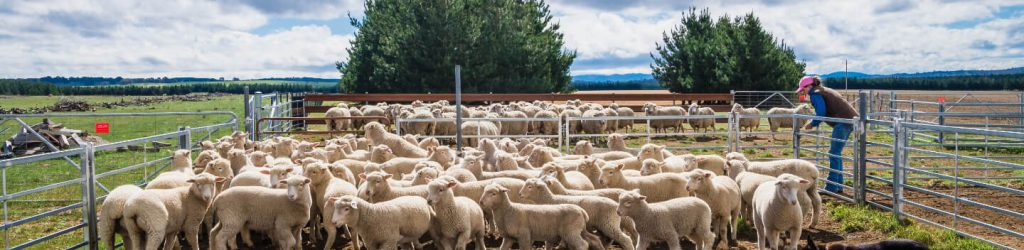
Australia was once said to be “built on the sheep’s back”, but after almost 150 years of wool dominance, the balance is shifting. Across the country, broadacre cropping is steadily edging out mixed farming.
In 1797, John Macarthur brought his first Merino sheep to New South Wales and kicked off one of Australia's most profitable and long-lasting industries. By 1870, Australia had become the world’s largest wool producer, a title it would hold for generations. Today, we remain the second-largest producer and the global leader in high-quality wool exports.
Yet despite this legacy, the national flock has been in long-term decline. Since 1990, national flock stock numbers have fallen by almost 100 million – from 170 million to 74 million.
Meat & Livestock Australia’s 2025 Sheep Industry Projections reported another 6.2% contraction as of June 2025, bringing the flock to 74.2 million head.
Sheep Dearer Than Deere
For many farmers in prime cropping regions, the numbers simply don’t stack up. Running sheep can’t compete with the returns - or the efficiency - of modern cropping systems.
Tim Rethus, who phased out sheep on his Horsham-district farm 25 years ago, recalls the turning point clearly.
"Sixty bales of wool in the 90s was worth one paddock of wheat in profit," he said, noting the work involved just didn’t match the profit.
Today, millions of dollars’ worth of machinery roam his paddocks. "All the [cropping] equipment is slowly getting closer to automation," he said.
"They're adding things onto machines to take away some of the human interventions required and turning the operator into more of a supervisor."
Herd Mentality Not Completely Gone
But not everyone is moving away from sheep. In Marnoo, east Wimmera, farmer Trent Carter is doubling down on dual enterprises. Of his 3,400-hectare farm, 2,400 hectares go to crops and the remainder to sheep and fodder. For him, the two enterprises go hand in hand.
Mr Carter said some people were deterred from running sheep because of the labour involved, but he believes investment in shearing sheds, yards and handling equipment was needed.
"There's no difference from a decent set of yards to a decent tractor, it's enticing that younger generation to work in your industry," he said.
Click Goes The Shears, Boys (and Girls)
While it’s easy to assume the next generation prefers high-tech machinery, some young farmers are leaning back into livestock.
Longerenong Agricultural College student and generational farmer Oliver Moore has his sights set on increasing sheep in their business.
"It gives a bit of diversity for an income and you're doing something different every day," he said.
"I love roustabouting, helping out the shearers, sweeping the wool, picking up the fleeces and do a bit of skirting of the fleeces as well," he said.
The girls are getting into the sheds too, ready to grab the sheep by its fleece.
While just under 5 per cent of the shearing workforce were women in the 2021 Census, industry groups say numbers rose during COVID when international shearers couldn’t travel.
At TAFE NSW’s Primary Industry Centre in Wagga Wagga, head agriculture teacher Rob Harris says nearly half his wool-classing students are now women, and around 10% of learners are shearers.
"They're terrific shearers, they're really smooth, they get on the skin, have few cuts, and they start pumping them out. They're really good," he said.
"If you've got other women there who can be mentors, that is just so much better … even though it might be a male-dominated area, the success of all women in agriculture is really good."
Cropping Up But The Sheep's Not Gone Yet
Australia may never return to the flock numbers of the early ’90s, but sheep remain an important pillar of many broadacre farms and of the national economy.
MLA expects the sheep industry to enter a period of gradual recovery, with the national flock forecast to grow by 2.1 per cent in 2026 and a further 4.3 per cent by 2027, reaching 78.9 million head.
And with young farmers like Moore convinced livestock will remain central to their operations, the tradition that helped shape the nation is far from blown.
Sources: ABC, MLA, ABC, State Library NSW
Get the latest industry updates
Contact Us
Thank you for contacting us.
We will get back to you as soon as possible.
We will get back to you as soon as possible.
Oops, there was an error sending your message.
Please try again later.
Please try again later.